Crypto Prepaid Card vs Crypto Debit Card vs Credit Card: The Real Differences
A crypto prepaid card spends a balance you load first; a crypto debit card sells coins as you pay; a credit card lends you money. How each works, who it suits.
A crypto prepaid card spends a balance you load in advance, so you can never spend more than you put in. A crypto debit card is usually linked to an exchange account and sells your coins at the moment you pay. A credit card lends you money and bills you later. The difference that matters most is where the money comes from at the moment of the payment.
Three card types in one sentence each
- Prepaid card: you move money onto the card first, then spend that balance.
- Debit card: each payment draws directly from an account you hold, such as a bank account or an exchange wallet.
- Credit card: the issuer pays the merchant on your behalf and you repay later, often with interest if you don't pay in full.
All three can run on Visa or Mastercard, and a merchant usually can't tell them apart just by looking at the checkout. The differences are in how they are funded, what can go wrong, and who can get one.
How a crypto prepaid card works
With a crypto prepaid card, the crypto is converted before you spend.
- You deposit crypto to the card provider.
- The provider converts it into a fiat-denominated balance, such as US dollars.
- You load part of that balance onto a card.
- Payments draw from the card's loaded balance.
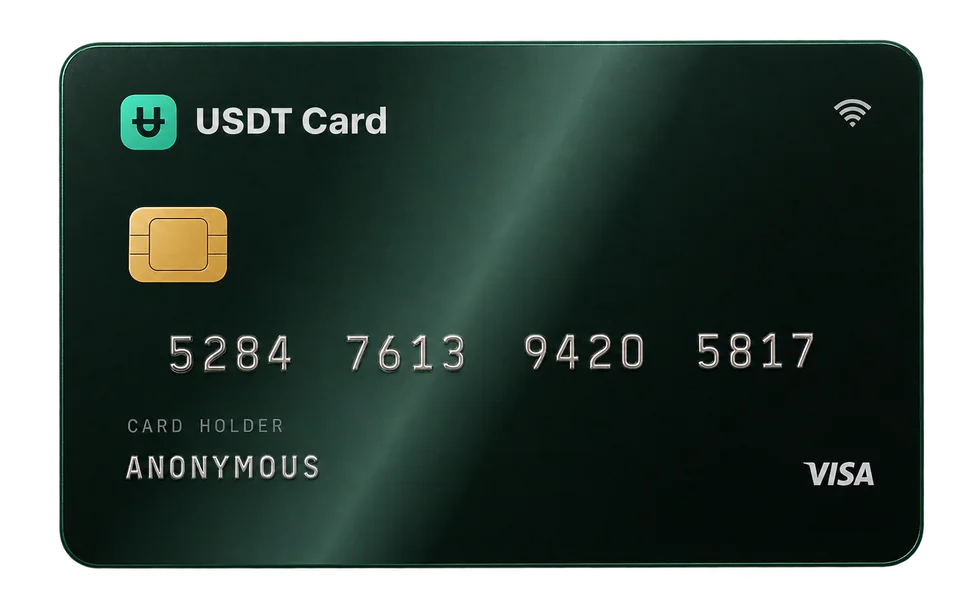
On USDT Crypto Card, for example, every deposit, whatever the coin, is converted to USDT (ERC-20) and held 1:1 with the US dollar. You issue virtual cards from that balance, each with its own loaded amount, and top them up for free when they run low.
What this means in practice:
- Your spending money stops moving with the crypto market once it's deposited.
- A card can only lose what is loaded on it. If one card number leaks, the rest of your balance is not exposed.
- There is no credit check, because there is no credit.
How a crypto debit card works
A crypto debit card is typically issued by an exchange or a crypto app and linked to your holdings there. When you pay, the app sells just enough of a coin you selected to cover the purchase, at that moment.
What this means in practice:
- You keep holding crypto until the second you pay, so the price you get depends on the market at that instant.
- Each payment may be a separate sale, which in some countries can be a taxable event. This is not tax advice; rules differ by country.
- Debit cards from exchanges usually require full identity verification, because they are tied to an exchange account that does.
- If the card is compromised, it may have access to the whole linked balance, depending on the limits you set.
Some providers call any crypto card a "debit card" in marketing, so check how funding actually works rather than relying on the name.
How a crypto credit card works
A crypto credit card is a regular credit card that adds a crypto angle, most often rewards paid in crypto, or a credit line secured by crypto collateral.
What this means in practice:
- You need to qualify, which normally means a credit check and identity verification.
- You spend the issuer's money and repay later. Late or partial repayment can cost interest.
- Credit cards tend to be accepted in the widest range of situations, including hotel and car rental deposits.
Prepaid vs debit vs credit: comparison table
| Crypto prepaid card | Crypto debit card | Credit card (crypto-linked) | |
|---|---|---|---|
| Where the money comes from | Balance you loaded in advance | Your linked account, sold at payment time | The issuer's credit line |
| Conversion from crypto | At deposit | At each payment | At repayment, if you repay with crypto |
| Can you overspend? | No | Up to linked balance and limits | Up to credit limit |
| Credit check | No | Usually no | Yes |
| Identity verification | Depends on provider; some need none | Usually yes | Yes |
| Exposure if card leaks | Only what's loaded on that card | Linked balance, within limits | Credit limit (often disputable) |
| Typical best use | Online spending, budgets, separate cards | Spending crypto you hold on an exchange | Travel deposits, large purchases |
Which crypto card type suits you?
Choose a crypto prepaid card if
- You want to spend crypto without a credit check or, with some providers, without ID documents.
- You want separate cards for separate purposes: one per subscription, project or ad account.
- You want predictable spending, with a hard ceiling equal to what you loaded.
- You prefer to convert once at deposit rather than at every payment.
For the no-documents angle specifically, see what a no-KYC virtual card is.
Choose a crypto debit card if
- You already keep funds on an exchange, are fully verified there, and want to spend directly from that account.
- You're comfortable with each payment selling crypto at the market price of that moment.
Choose a credit card if
- You need a card for hotel or car rental deposits, which often prefer credit cards.
- You qualify for credit and pay your balance in full each month.
Many people combine them: a credit card for travel holds and a prepaid crypto card for everyday online spending.
What USDT Crypto Card is
USDT Crypto Card is a prepaid product. To be specific:
- Account: a seed phrase login, no ID documents or selfie. A confirmed email is required before depositing or issuing cards.
- Funding: 10 deposit assets (BTC, ETH, SOL, USDT, BNB, TRX, POL, LTC, AVAX, ARB), all converted to USDT and held 1:1 with USD.
- Cards: virtual Visa and Mastercard, 9 BINs to choose from, $1 per card, freeze and unfreeze any time.
- Spending: $0.30 per approved transaction, declines free. Virtual plan limits are $5,000 per transaction and $20,000 per month; Platinum, unlocked by one deposit of $300 or more, removes them and adds an optional physical card.
There's no credit line, no interest and no overdraft. Full numbers are in the pricing section, and the features section shows what you can do with cards.
Common misconceptions
"Prepaid cards are declined everywhere." Many merchants accept prepaid cards without any issue. Some decline them by policy, and acceptance varies by merchant and BIN. Choosing a suitable BIN helps; see what a BIN number is.
"A debit card is safer because it's not credit." Safety depends more on what a leaked card can reach. A prepaid card limited to a small loaded amount exposes less than a debit card linked to a large balance.
"Virtual means it can't be used in stores." Virtual cards can often be added to Apple Pay or Google Pay for in-store payments. See virtual vs physical crypto cards for the full comparison.
Frequently asked questions
What is a crypto prepaid card?
A card you load in advance with money that came from crypto. The crypto is converted to a fiat balance at deposit, and you spend that balance by Visa or Mastercard, never more than what's loaded.
Is a crypto debit card the same as a prepaid card?
No. A crypto debit card normally sells crypto from a linked account at the moment you pay. A prepaid card spends a balance that was already converted and loaded.
Do crypto prepaid cards need a credit check?
No. Because there's no borrowing, there's nothing to assess. Some providers still require identity documents; USDT Crypto Card does not.
Can I build credit with a crypto prepaid card?
Generally no. Prepaid cards don't extend credit, so they aren't a credit history tool.
Which is best for hotel and car rental deposits?
A credit card usually is, because many merchants prefer credit cards for holds. Some accept prepaid or debit cards, but policies vary.