Private Online Payments: How Virtual Cards Limit What Merchants See
Private online payments start with knowing what merchants collect when you pay. How virtual card privacy works, what it can't hide and habits to share less.
Private online payments come down to sharing less: fewer card details stored at fewer merchants, and less personal data attached to each payment. A virtual card helps because each merchant can get its own card number, which you can freeze or delete, and because a crypto-funded card isn't tied to your bank account. It won't make you anonymous, though: merchants still see the email, address and device information you give them.
What a merchant sees when you pay by card
When you pay online, the merchant and its payment processor typically receive or record:
- The card number, expiry and CVV (the CVV shouldn't be stored after authorisation under card industry rules).
- The BIN, the first digits of the card number, which reveals the issuing institution, the network and often the card type, such as prepaid.
- The cardholder name you type at checkout.
- The billing address, if the checkout asks for it.
- Your email address and phone number, if requested.
- Your shipping address, for physical goods.
- Technical data: IP address, approximate location, browser and device details, used for fraud scoring.
- Your order history with that merchant.
What the merchant normally doesn't see is your other card balances, your bank account details, or what you buy elsewhere.
What the card issuer and networks see
On the other side of the payment, the card issuer and the network see:
- the merchant's name and category;
- the amount, currency, date and time;
- whether the payment was approved, declined or refunded.
That's how every card works. Using a card provider you trust, and securing your account well, matters as much as limiting merchant data.
How virtual cards improve payment privacy
One card per merchant
With a traditional bank card, the same number is stored at every shop you've ever used. If any of them is breached, that number is exposed everywhere at once. With virtual cards you can give each merchant its own number:
- a breach at one merchant exposes only that card;
- you can freeze or delete that card without disrupting anything else;
- merchants can't use a shared card number to link your purchases across shops.
On USDT Crypto Card each card costs $1 to issue, so separate cards are practical. Disposable virtual cards for subscriptions shows how to organise them.
A limited balance on each card
A prepaid virtual card can only spend what's loaded on it. If a card number leaks, the exposure is that card's balance, not your whole account.
No bank account behind the card
A crypto-funded card is loaded from a balance you deposited in crypto. Your bank account number and bank card never reach the merchant, and your bank doesn't see a line item for each online purchase.
Fewer personal details at sign-up
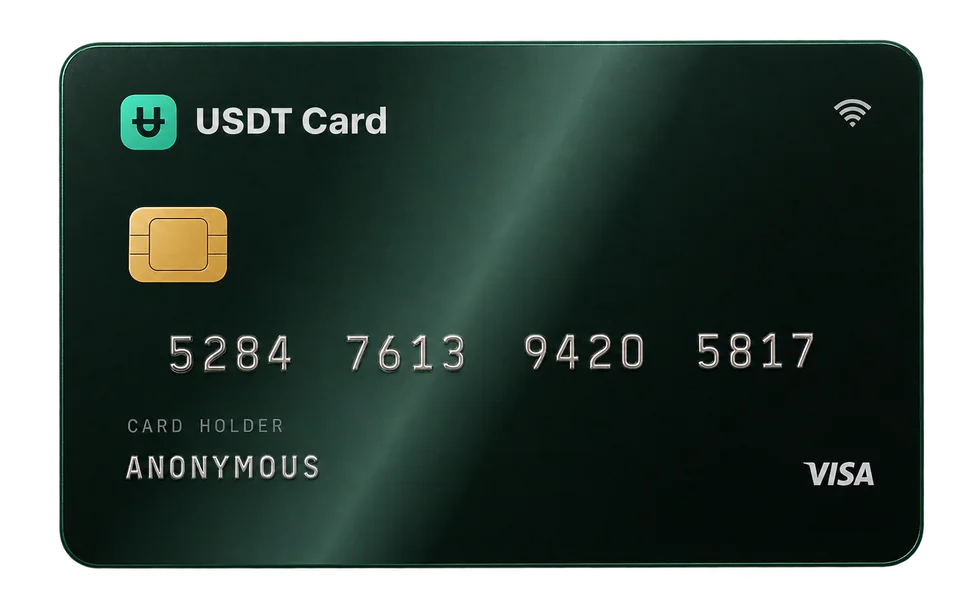
USDT Crypto Card opens with a seed phrase login and no ID documents or selfie. A confirmed email is required before depositing or issuing cards, and the default name on cards is "Anonymous". For the full model, see what a no-KYC virtual card is.
What virtual cards can't hide
Being honest about the limits is part of good privacy:
- Merchant accounts. If you sign up with your real name, email and address, the merchant has them, whatever card you use.
- Shipping. Physical goods need a delivery address.
- Technical fingerprints. IP address and device data are collected by most checkouts.
- Blockchain history. Crypto deposits are recorded on public blockchains. If you send from an exchange where you're verified, that link exists. Crypto is pseudonymous, not anonymous.
- Legal process. Providers may be required by law to respond to valid legal requests.
Payment privacy is about minimising unnecessary exposure, not about escaping legal obligations. Using it for fraud, evading bans or breaking merchant terms isn't privacy; it's abuse, and it isn't something we support.
Data minimisation habits for online payments
Data minimisation means sharing only what's needed for a transaction. Practical habits:
- Use a separate card per merchant or category, especially for subscriptions and services you may cancel.
- Load only what a card needs, plus a small margin for tax and fees.
- Don't save cards at merchants you rarely use. Pay as a guest where possible.
- Fill only required fields. Optional phone numbers, birthdays and marketing preferences can be left blank.
- Use a dedicated email for shopping and sign-ups, or a privacy-focused alias service.
- Freeze cards between uses. A frozen card declines everything until you unfreeze it.
- Delete cards you no longer need. On USDT Crypto Card the remaining balance returns to your account.
- Review card transactions regularly to catch anything unexpected.
- Secure the account that issues your cards with a private seed phrase and 2FA; see seed phrase and 2FA security.
Privacy compared: payment methods at a glance
| Method | What the merchant gets | Linked to your bank? | Exposure if leaked |
|---|---|---|---|
| Main bank card | Long-lived card number, your name | Yes | Whole account, until card replaced |
| Bank's own virtual card | Separate number, your name | Yes | That card's limit |
| Crypto-funded virtual card | Separate number, name you choose to give | No | That card's loaded balance |
| Direct crypto payment | A blockchain payment | No | Only what you sent; on-chain visibility |
Direct crypto payments, where a merchant accepts them, can share even less, but fewer merchants offer them and renewals are often manual. Paying for a VPN, hosting and domains with crypto compares both routes.
Privacy and approval rates
Some privacy choices can affect whether a payment is approved:
- Merchants may decline prepaid cards, or score a payment as riskier when details are minimal.
- Some merchants verify the billing address or require a cardholder name that matches an ID. Where that's a legitimate requirement, a privacy-first virtual card may not suit that merchant.
- Choosing a suitable BIN helps with acceptance; see what a BIN number is.
If you hit a decline, why was my virtual card declined? covers the usual causes.
Frequently asked questions
What does a merchant see when I pay with a virtual card?
The card number and BIN, the name and billing details you enter, your email, and technical data such as IP address and device. They don't see your account balance, other cards or your bank details.
Are virtual cards more private than regular cards?
They can be. Separate numbers per merchant prevent one number from being stored everywhere, and a crypto-funded card isn't linked to your bank account. The personal data you type at checkout is still shared.
Does a virtual card make online payments anonymous?
No. It reduces how much data is shared and limits exposure, but merchants still collect whatever you provide, plus technical data.
What is data minimisation in payments?
Sharing only what's necessary for a transaction: separate cards, only required fields, dedicated emails, and deleting cards and accounts you no longer use.
What name appears on a USDT Crypto Card?
The default cardholder name is "Anonymous". Some merchants require a name that matches an ID; in those cases, follow the merchant's requirements or use another payment method.