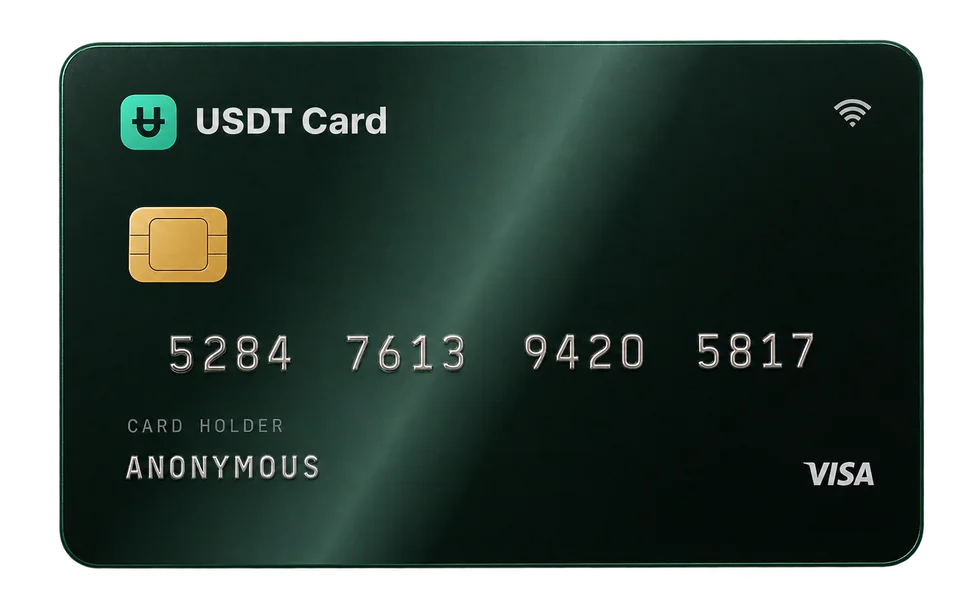
Freelancer Crypto Card: How to Get Paid in USDT and Spend It
A freelancer crypto card lets you get paid in USDT by clients abroad and spend it online. Learn to invoice, receive and deposit stablecoins, plus tax basics.
A freelancer crypto card lets you get paid in USDT by clients anywhere and then spend that money online like a normal Visa or Mastercard, without waiting on international bank transfers. The usual flow is: invoice in dollars, receive USDT to a wallet or exchange on an agreed network, deposit to the card account, and spend. Getting paid in crypto doesn't change your tax obligations, so keep records and check the rules where you live.
Why freelancers and remote workers use USDT
International payments are one of the oldest headaches of freelance work. Bank wires can be slow and expensive, payment platforms take a percentage, and some countries have limited access to popular payment services. USDT, a stablecoin pegged to the US dollar, offers a different route:
- Speed. A blockchain transfer usually settles in minutes, not days, depending on the network.
- Dollar value. USDT is designed to stay at $1, so you avoid the price swings of BTC or ETH between invoice and payment.
- Global reach. Anyone with a wallet or exchange account can send it, wherever they are.
- Fewer intermediaries. The client sends; you receive. No correspondent banks in between.
The trade-offs are real too: clients need to be comfortable paying in crypto, sending on the wrong network can lose funds, and stablecoins carry their own risks. If you're weighing USDT against USDC, see USDT vs USDC.
How to get paid in USDT
1. Agree on terms before you invoice
Put payment details in your contract or proposal, not just on the invoice:
- Currency of the price. Price your work in USD and state that payment is in USDT at 1 USDT = 1 USD. This keeps the amount unambiguous.
- Network. Name the network explicitly, for example "USDT on Ethereum (ERC-20)". The same token exists on several chains, and they aren't interchangeable.
- Who pays the transfer fee. Decide whether the client covers network and exchange fees so you receive the full invoice amount, or whether you absorb them.
- Deadline and late terms, as you would for any invoice.
2. Choose where you'll receive the funds
You have two broad options:
- Your exchange account. Easy if you plan to convert or move funds later. Your exchange gives you a deposit address per coin and network.
- A self-custody wallet. You hold the keys yourself. You'll need a small amount of the network's native coin (such as ETH for ERC-20 transfers) to move the funds onward.
Whichever you use, give the client an address for the network you agreed on, and send it in writing so there's a record.
3. Send a clear invoice
A good crypto invoice includes your details, the client's details, a description of the work, the USD amount, the USDT amount, the network, the receiving address and the payment due date. Ask the client to share the transaction ID once they've paid.
4. Verify the payment
Check the transaction on a block explorer or in your exchange's deposit history. Confirm the amount, network and that it has enough confirmations. Only then mark the invoice as paid.
Setting up a freelancer crypto card
Once the money has arrived, moving it to a card is straightforward on USDT Crypto Card:
- Open an account. Your account is a seed phrase in the format
xxxx-xxxx-xxxx-xxxx. There are no ID documents or selfies to upload. Store the seed safely: it's the only way into the account. - Confirm your email. A confirmed email is required before you can deposit or issue and fund cards.
- Create a deposit request. Choose USDT and the amount. USDT is accepted on the ERC-20 (Ethereum) network; the deposit screen shows the address and network. Requests expire after 1 hour.
- Send from your exchange or wallet on that exact network. Our guide on funding a crypto card from an exchange walks through it.
- Issue a card. Each card costs $1 and needs a minimum load of $50 from your balance.
If a client pays you in another coin, you can deposit BTC, ETH, SOL, BNB, TRX, POL, LTC, AVAX or ARB too. Every deposit is converted to USDT automatically and your balance is always held in USDT, 1:1 with USD.
Keep fees down
- Batch deposits. Deposits under $300 carry a 2% fee; deposits of $300 or more carry none. If you're paid in several small amounts, consider depositing them together.
- Watch network fees. Flat network and exchange fees weigh more on small transfers. See the cheapest network to send USDT.
- Avoid needless conversions. If you're paid in USDT and spend from a USDT balance, there's nothing to convert.
Spending your earnings
With a funded card you can pay for the things freelancers buy most: software subscriptions, hosting and domains, design assets, online courses, travel bookings and everyday online shopping. You can also add a virtual card to Apple Pay or Google Pay for in-store payments, where the merchant accepts them.
Some practical habits:
- Separate business and personal spend. Keep one card for tools and clients, another for personal purchases. Cards cost $1 each, and you can hold up to 20.
- Use a dedicated card for subscriptions so a cancelled service can't keep billing you. See disposable virtual cards for subscriptions.
- Mind the limits. The Virtual plan allows up to $5,000 per transaction and $20,000 per month. A single deposit of $300 or more unlocks Platinum, with no spending limits and the option of a physical card.
- Freeze a card from the dashboard if you suspect a problem; unfreeze it when you're ready.
Each approved transaction costs $0.30; declines are free. The full fee schedule is in the pricing section.
Tax and record-keeping
This section is general information, not tax advice. Tax rules for crypto income differ widely between countries and change often, so speak to a qualified tax professional where you live.
In many countries, the general principles look like this:
- Income is income. Being paid in USDT usually doesn't change whether the payment is taxable. It's often treated as income at its value when you receive it.
- Conversions can matter. In some jurisdictions, swapping one crypto asset for another, or spending crypto, can be a separate taxable event, even for a stablecoin whose value barely moves.
- Records are your responsibility. Not having to upload ID documents to open a card account doesn't change any reporting duty you have.
Keep a simple ledger for each payment:
| Record | Why it helps |
|---|---|
| Invoice number and client | Links the payment to the work |
| Date received | Determines the tax period |
| Amount in USDT and USD value | Establishes the income amount |
| Network and transaction ID | Proves the payment on-chain |
| Fees paid | May be deductible in some places |
| Deposits to the card account | Shows where the funds went |
Export or screenshot your card transaction history regularly so you can match business expenses to receipts.
Risks to keep in mind
- Wrong-network payments. The most common loss. Confirm the network in writing and check the first payment carefully.
- Clipboard malware and fake invoices. Double-check addresses, and be wary of anyone asking you to "refund an overpayment" to a different address.
- Stablecoin risk. USDT is designed to hold $1 but isn't a bank deposit.
- Merchant acceptance. Some merchants restrict prepaid cards. Choosing a suitable BIN helps; see what a BIN number is.
Ready to set it up? Create an account and check the current plans and fees.
Frequently asked questions
Can I get paid in USDT as a freelancer?
Yes, if your client agrees. Price the work in USD, specify USDT and the network in writing, and give a receiving address for that network. Then confirm the transaction on-chain before marking the invoice paid.
Which network should my client use to pay me in USDT?
Whichever network your receiving wallet or exchange address supports, stated clearly on the invoice. If you plan to deposit straight to USDT Crypto Card, note that it accepts USDT only on ERC-20 (Ethereum).
Is income paid in USDT taxable?
In many countries, yes. It's often treated like any other income at its value when received. Rules vary, so check with a tax professional. This isn't tax advice.
Do I need ID to open a card for my freelance earnings?
Not on USDT Crypto Card. The account is opened with a seed phrase and no ID documents. You do need a confirmed email before depositing or issuing cards, and your legal and tax duties stay the same.
How do I keep business and personal spending separate?
Issue separate cards for each. Each card costs $1, holds its own balance and has its own transaction history, so business tools and personal purchases never mix.